How to Pack Light for Two Weeks Without Forgetting Basics
A practical packing system for two weeks with one carry-on or small bag, including a repeat-wear clothing plan and a simple checklist.
Deelo Editorial
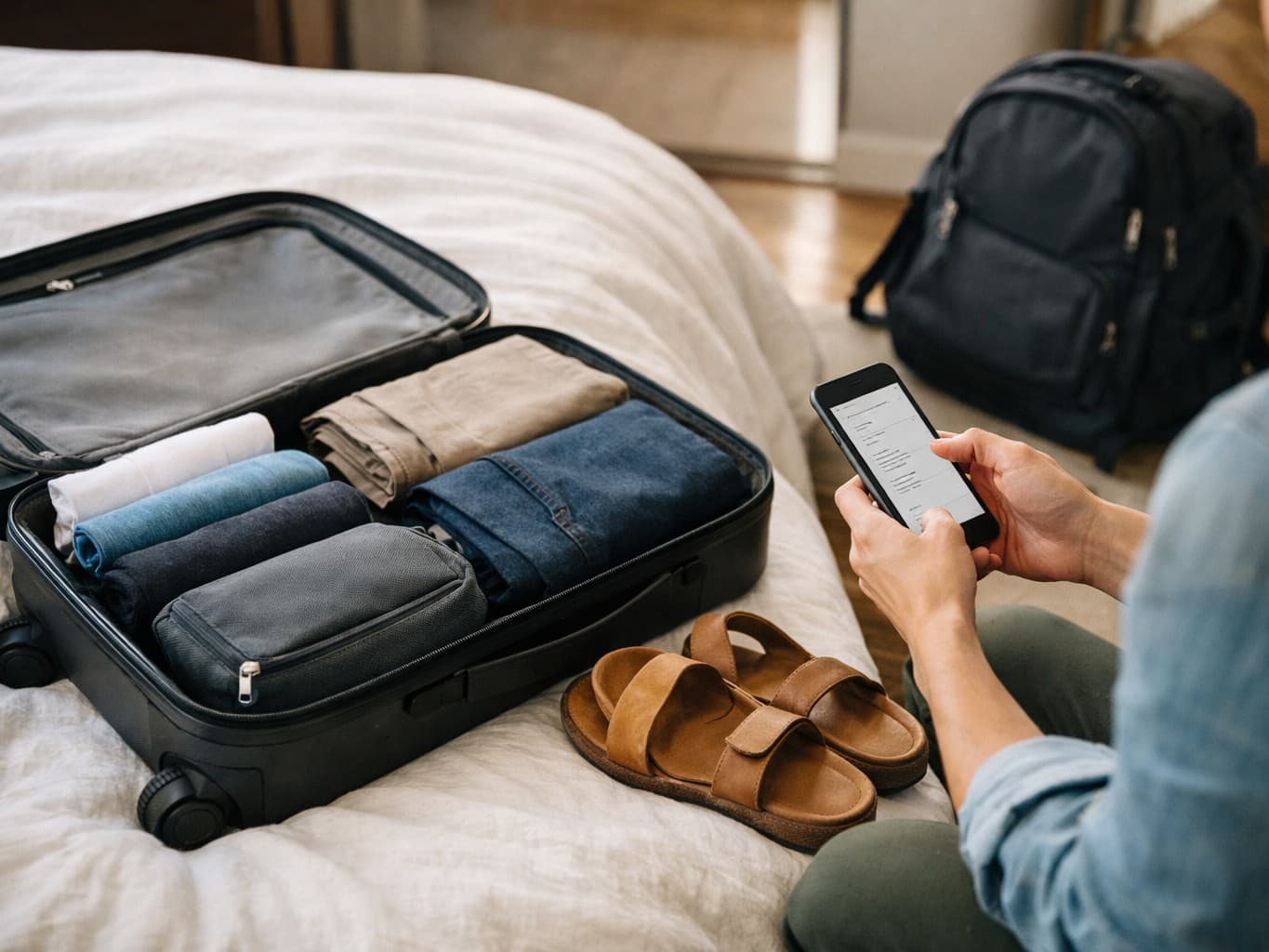
Packing light for two weeks is mostly a math problem: bring fewer categories of things, choose pieces you can re-wear, and plan to do laundry once if needed. Most travelers overpack because they pack for every possible scenario instead of the trip they are actually taking.
That does not mean going minimalist for its own sake. It means building a small, flexible kit that covers your real itinerary, your climate, and a reasonable margin for error without turning your bag into a burden.
Start with your trip, not your suitcase
The easiest way to fail at packing light is to start by laying out clothes you like and hoping they somehow fit. Start with constraints instead: weather, laundry access, dress requirements, and how often you will change activities in a day.
For a typical two-week trip, write down four things before you pack:
- the expected temperature range
- whether you can do laundry once
- any occasions that require special clothing
- the kind of shoes the trip actually demands
That last point matters more than people expect. A city trip with museums and dinners packs differently from a beach trip, which packs differently from a hiking-heavy itinerary. If your itinerary is still loose, keep it loose in a useful way. A lighter planning style usually makes lighter packing easier because you are not trying to prepare for ten imaginary versions of the same trip. Our guide to How to Plan a Trip Without Overplanning It is useful here because a realistic framework cuts down on panic packing.
Use a simple repeat-wear formula
If you are wondering exactly how to pack light for two weeks, the answer is usually not fourteen outfits. It is a small rotation you can wear multiple times in different combinations.
A practical baseline for many two-week trips looks like this:
Clothing
- 5 to 7 tops
- 3 bottoms
- 1 versatile layer, like a sweater or overshirt
- 1 weather layer, like a rain shell or packable jacket
- 1 to 2 dresses or one nicer outfit if your trip needs it
- 7 underwear
- 3 to 5 pairs of socks, depending on climate and shoe choice
- 2 bras if relevant
- sleepwear
- workout gear only if you know you will use it
- swimwear only if the trip calls for it
That may look sparse on paper, but the point is repetition. Tops can often be worn more than once, especially if you use undershirts, choose fabrics that air out well, or are traveling in cooler weather. Bottoms usually repeat even more easily. Dresses can do double duty if they work for both daytime and dinner.
The real trick is color coordination. If most of your clothing works with most of your other clothing, you get more outfits without bringing more pieces. Neutrals help, but you do not need a capsule wardrobe personality transplant. You just need fewer one-off pieces.
Shoes
Shoes are where many light-packing plans collapse. Bring the minimum that covers the trip:
- one primary walking shoe
- one secondary option if necessary, such as sandals, flats, or compact evening shoes
If possible, wear the bulkiest pair in transit. Avoid packing shoes “just in case.” They are heavy, awkward, and usually not worth the space.
Outerwear
Outerwear should layer, not multiply. A light insulating layer plus a waterproof shell is more flexible than one bulky coat for many destinations. If you are going somewhere cold, your heaviest outerwear should usually be worn on the plane or train rather than packed.
Build around laundry, not abundance
One of the biggest mindset shifts in learning how to pack light for two weeks is accepting that you do not need two weeks of clean clothes. You need enough clothes to get from one wash to the next.
If you can do laundry once during the trip, your bag can shrink dramatically. That laundry can happen in a hotel sink, a laundromat, an apartment rental, or a hotel service if the price is worth it to you.
If you do not expect easy laundry access, you can still pack light by emphasizing repeat-wear items and quick-drying basics. Underwear and socks are usually the easiest things to wash and dry overnight. Bulkier clothing is what clogs a bag, so reduce that first.
A small amount of washing is often less annoying than dragging a heavy suitcase over stairs, train platforms, cobblestones, and airport terminals.
Toiletries: decant, reduce, and stop packing duplicates
Toiletries take up more space than they seem to because they are dense, irregularly shaped, and easy to duplicate by accident. The fix is not complicated.
Bring small amounts of what you actually use, not full-size versions of everything you own. Decant liquids into travel containers if you need them. If you are staying somewhere with soap, shampoo, or a hair dryer, decide whether the provided version is good enough before you pack your own.
A solid toiletries strategy usually includes:
- toothbrush and a small toothpaste
- skincare essentials only
- deodorant
- minimal makeup if relevant
- razor only if you know you want it
- medications and a small first-aid basic kit
- sunscreen if needed for the destination or planned activities
The key word is essentials. Many travelers pack aspirational toiletries the same way they pack aspirational clothes. If you never use the hair tool, the extra serum, or the full makeup bag at home during busy weeks, you are unlikely to become that person on day six of a trip.
Electronics: pack for your actual habits
People often ask how to pack light for two weeks and then fill half their backpack with chargers, cables, cameras, and devices they barely use. Electronics deserve the same realism as clothing.
Bring the devices that support how you actually travel:
- phone
- charger
- power adapter if needed
- power bank if you rely on your phone for maps and tickets
- earbuds or headphones
- laptop or tablet only if the trip requires it
Try to reduce cable sprawl. A small pouch helps, but fewer devices help more. If your camera matters to you, bring it. If you always imagine using it and end up taking photos on your phone, leave it behind.
The personal item matters as much as the main bag
If you want to travel lighter, think in terms of one main bag and one carefully chosen personal item. The personal item should carry what you need in transit, not become a second suitcase.
A good personal-item setup usually holds:
- passport or ID
- wallet
- phone
- medications
- charging cable and power bank
- headphones
- water bottle if practical
- one extra layer or scarf
- snacks
- anything fragile or valuable
This setup makes your main bag simpler because in-transit necessities are easy to reach without tearing through your clothes at the gate.
A sample two-week packing list that works for many trips
There is no universal packing list, but this one fits a lot of moderate-weather city, mixed-activity, or general vacation travel:
Main bag
- 6 tops
- 3 bottoms
- 1 sweater or overshirt
- 1 lightweight jacket or rain shell
- 1 nicer outfit or one multipurpose dress
- 7 underwear
- 4 pairs of socks
- sleepwear
- 1 pair of packed shoes
- toiletries bag
- laundry bag
- chargers in a small pouch
Personal item
- travel documents
- phone
- wallet
- medications
- earbuds or headphones
- power bank
- snacks
- reusable water bottle if empty for security
- one book, e-reader, or small entertainment item
Worn in transit
- bulkiest shoes
- heaviest layer
- most versatile bottom
This list is not rigid. In hot climates, you may swap the sweater for lighter pieces and add one more top. In colder climates, layering pieces matter more than extra outfit changes. But the overall structure stays the same: a compact rotation, not one outfit per day.
Common reasons people overpack
Most overpacking comes from a few predictable habits.
Packing for fantasy situations
You probably do not need a separate outfit for a dinner you may or may not book, a workout routine you may or may not start, and a beach day that only happens if the weather changes. Pack for your booked plans and your likely habits.
Bringing too many backups
One backup item can be sensible. Five backup items are usually clutter. You do not need three spare tops because one might feel wrong, or an extra pair of shoes because another pair might get slightly uncomfortable.
Ignoring re-wear reality
At home, many people wear jeans, overshirts, sweaters, and jackets multiple times before washing them. Then they travel and suddenly pack as if every item self-destructs after one use. Bring the same common sense on the road.
Choosing the wrong bag first
Large suitcases invite overpacking. A smaller carry-on or travel backpack imposes useful limits. If your goal is to learn how to pack light for two weeks, your bag should support that goal instead of fighting it.
How to handle special cases
Some trips genuinely make packing harder. The solution is usually adjustment, not abandoning the whole approach.
Cold-weather trips
Cold-weather travel is bulkier, but you can still stay relatively light by focusing on layers and repeat-wear basics. Thermal base layers, one or two mid-layers, and a coat worn in transit often work better than packing multiple heavy sweaters.
Work trips
Work travel becomes easier when one color palette dominates. If your shoes, blazer, trousers, and shirts all work together, you can cover multiple meetings with fewer pieces. Casual off-hours clothing can be kept minimal.
Family travel
Packing light gets harder when you are carrying for children, but the principle still holds. Shared toiletries, fewer shoes, and realistic activity planning all help. If the trip includes a road segment and you need a rental, comparing options through something like DiscoverCars can help keep the logistics simple without changing your packing strategy.
Disclosure: This article contains an affiliate link. We may earn a commission if you make a purchase through it, at no extra cost to you.
Long transit days
If you have multiple flights or train connections, lighter packing matters even more. The more often you need to lift, carry, or reorganize your bag, the more every unnecessary item starts to feel expensive.
A five-step packing process that prevents last-minute chaos
Packing light is easier when you use a sequence instead of tossing things into a bag.
1. Check the weather and itinerary once
Do one solid review, not ten anxious refreshes. Look at likely conditions, not edge-case weather events.
2. Lay out a full capsule before packing
Choose pieces that all work together. If something only works with one exact outfit, question it.
3. Cut one third before the bag closes
Once everything is laid out, remove the least necessary items. This is often where extra tops, duplicate toiletries, and backup shoes disappear.
4. Pack, then test-carry the bag
Pick it up. Walk with it. Put it on your shoulder or back. If it already feels annoying at home, it will feel worse on day nine.
5. Keep a note during the trip
Notice what you did not wear and what you wished you had. Your best future packing list is the one built from your own actual trips.
Packing light also makes the rest of the trip easier
A lighter bag is not just about saving space. It changes how the trip feels. You move through airports faster, deal with stairs and public transport more easily, and spend less time unpacking, repacking, and managing stuff.
It can also save money around the edges. Traveling with only carry-on luggage can help you avoid checked-bag fees, and simpler trip logistics make it easier to be intentional in other parts of planning too. If you are still booking the trip itself, The Best Time to Book Flights, According to the Data can help you avoid the usual guesswork.
The goal is not to prove that you can survive with almost nothing. The goal is to bring enough, use most of it, and stop carrying the rest. For most two-week trips, that means a small rotation of clothes, a realistic laundry plan, and the discipline to leave “just in case” at home.